Beginner's Guide to Reading Avalanche Bulletins for Non-Skiers
Avalanche bulletins aren't just for skiers. Here's how to read the danger rating, elevation bands, slope...

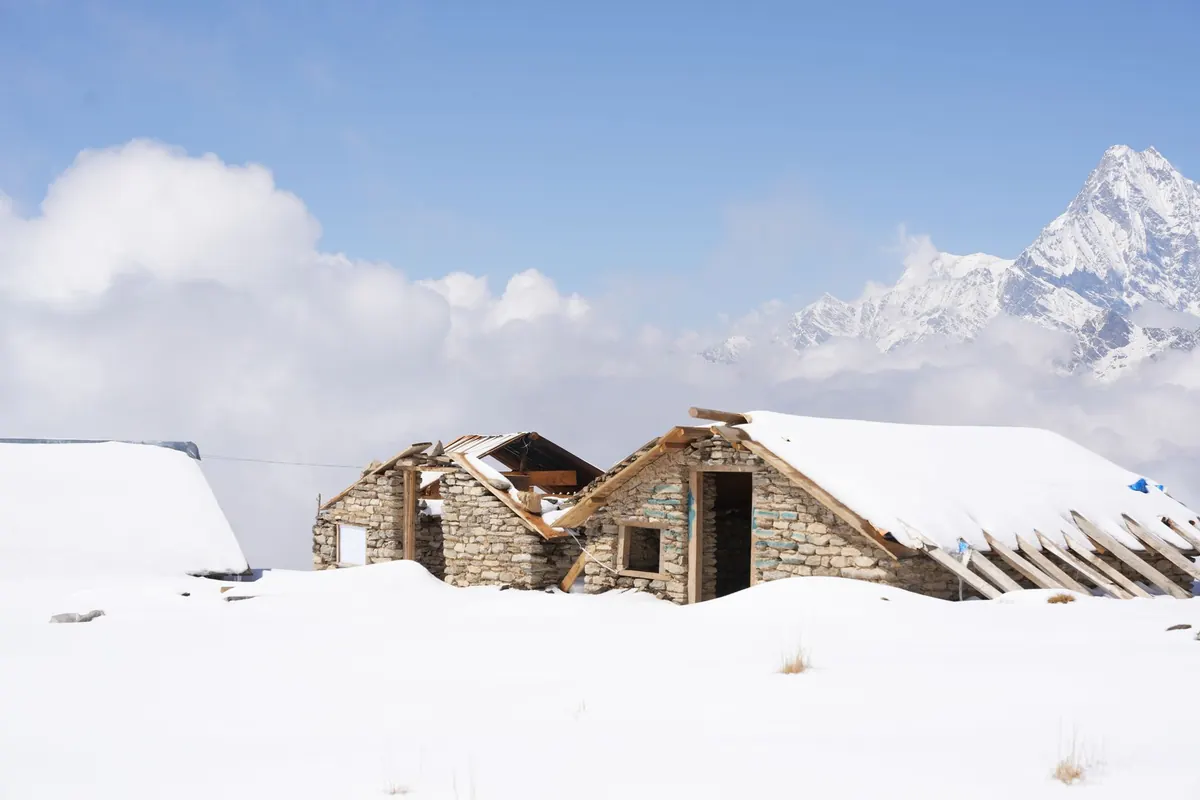
The first time you push open a hut door at half past twelve on a bright February Saturday, the heat, the soup steam and the noise hit you all at once. It feels like walking into somebody's living room in the middle of a party. In a way it is. An alpine hut is not a restaurant that happens to sit at 1,800 metres; it is a working building with its own rhythm, its own small economy, and a staff who have been up since five. A handful of habits will make you welcome rather than merely tolerated. Here is what nobody mentions before your first lunch stop.
A hut is a home that happens to sell soup. Behave as if the person clearing your plates also owns the place, because often they do.
In winter, a hut's busiest hours are short and predictable: roughly midday until two, and again on sunny weekends when the valley empties upward. If you are a group of five or more, or you are heading somewhere well known on a Saturday, call ahead. A day or two is usually enough; for holiday weeks, a week is not excessive.
Not every hut takes lunch reservations, and many only hold tables for larger groups. Ring anyway and ask two things: whether the kitchen is serving when you plan to arrive, and whether they want to know you are coming. Some close between services, some shut on quiet weekdays, and some stop hot food earlier than the sign on the door suggests.
Be specific on the phone — how many of you, what time, and whether you want a full meal or just a bowl of soup and a bench. If your plans change, call back. A table held for six who never appear is lost income on the one day the hut might fill, and it means somebody else was turned away.
Watch the door for thirty seconds before you walk through it. Somewhere near the entrance there will be a mat, a boot rack, a pile of borrowed slippers or a sign in three languages. Follow it. The floor inside is usually old wood, and it is always cleaned by someone who has to carry the water or haul the mop.
Take boots off where the hut asks you to, or at least knock the snow off and park them on the rack. If there is no rack, a plastic bag inside your pack works fine. Poles go in the stand by the door, not leaning against the first table you see. Wet jackets belong on hooks, not draped over the back of a chair where the next person will sit.
Rucksacks are welcome at the table, but tuck them under the bench or between your boots. In a full room, a pack left in the aisle is a trip hazard for a waitress carrying four plates of dumplings.
Most hut dining rooms are built around long tables and benches, and in a busy season you will be sitting next to strangers. That is normal and usually pleasant. Ask before you sit — a raised eyebrow and a gesture at the empty spot will do in any language — then take up only your share of the bench. Spread gloves, map, hat and thermos across the whole table and you have quietly taken three seats.
Work out how the hut runs before you queue: table service, counter service, or order-at-the-bar-and-collect. Watch the room for ten seconds and it becomes obvious. Winter menus are short and built for speed — soups, dumplings, a plate of cheese and bread, something with cabbage, a strudel. Order drinks and food in the same round rather than in three separate ones.
Ask what comes out fastest if you are on a schedule, and accept that a hut kitchen is not a city restaurant. Substitutions are rarely possible, and asking for them at the height of the rush earns you nothing but a tired look. Mention allergies when you order, not after the plate lands.
Between about half eleven and two, tables are a resource. Eat, drink, warm up, then make room. If you want to sit for two hours with a book and a coffee, arrive after the rush or pick a quieter hut — and order more than one drink while you are there. Nobody minds a long stay; they mind a long stay that takes a table out of circulation during the busiest hour of the week.
Assume you need cash and you will rarely be caught out. Many huts are cash only, and even those that take cards can lose the connection in bad weather or find the machine too cold to cooperate. Carry a spread of notes and coins rather than one large note; change is a finite resource up there.
Check before you order if it is not signposted, then learn the system: pay at the counter on the way out, pay at the table, or — in traditional self-service huts — collect your food and settle at the till. On shared tables where you order at the counter, be ready to say what you had.
On tipping, rounding up is plenty and nobody expects more. And if there is a queue behind you, do not attempt to split a small bill across four cards. One person pays, the rest settle later.
Leave-no-trace thinking usually happens outdoors, but huts test it harder. Water arrives by pipe, by snow-melt or on somebody's back. Power is limited. Waste goes down the mountain one way or another.
None of this is grim duty. It is the reason the room is warm, the soup is good, and the person behind the counter is still smiling at three o'clock.
Before you leave the car park or the lift station, run through this once. It takes fifteen seconds and saves a lot of small embarrassments.
Then say thank you on the way out. Hut staff spend the winter moving between a hot kitchen and a cold doorway, and a cheerful word costs nothing. You will get better service, better advice about the route ahead, and a good reason to come back next season.
Photo: Suman Maharjan / Pexels
Avalanche bulletins aren't just for skiers. Here's how to read the danger rating, elevation bands, slope...
Early-season snow reshapes Alpine village life fast — road crews, seasonal jobs, water reserves and old...
A practical guide to picking winter boots for icy, slushy alpine village streets — grip, insulation,...